From my window, I cannot see the horizon. The sun goes down and I do not know it. The moon trembles on the glass in front of me. The days repeat themselves. A few months ago we lived an atypical moment. The striated, organised, busy time slips away. Our space is shrinking. The lack of time used to overwhelm us, now the excess amazes us.
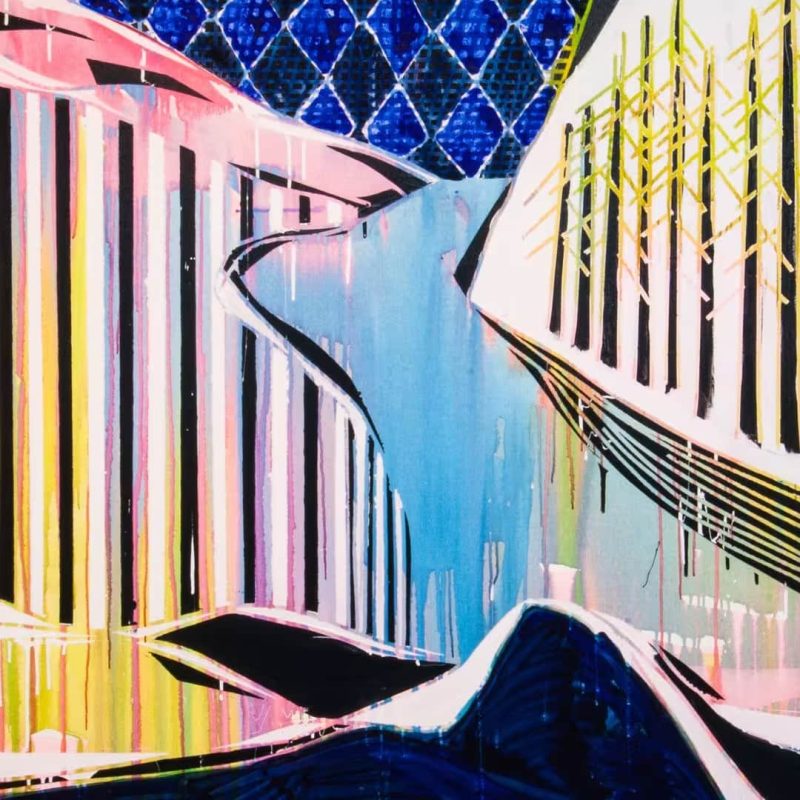
The everyday landscape is restricted to the geometry of our windows. It was there that the light entered, but, in a short time, its traces and shadows vanished. Living in a dilated space-time demanded an exercise in calm and reinvention. The noises of the street kept a large space for silence. An introspective gesture, a new horizon, where we came closer to our imagination. The perplexity of change, an unheard cry asked us: ‘what now? Walking in short spaces to, little by little, glimpse new scenarios.
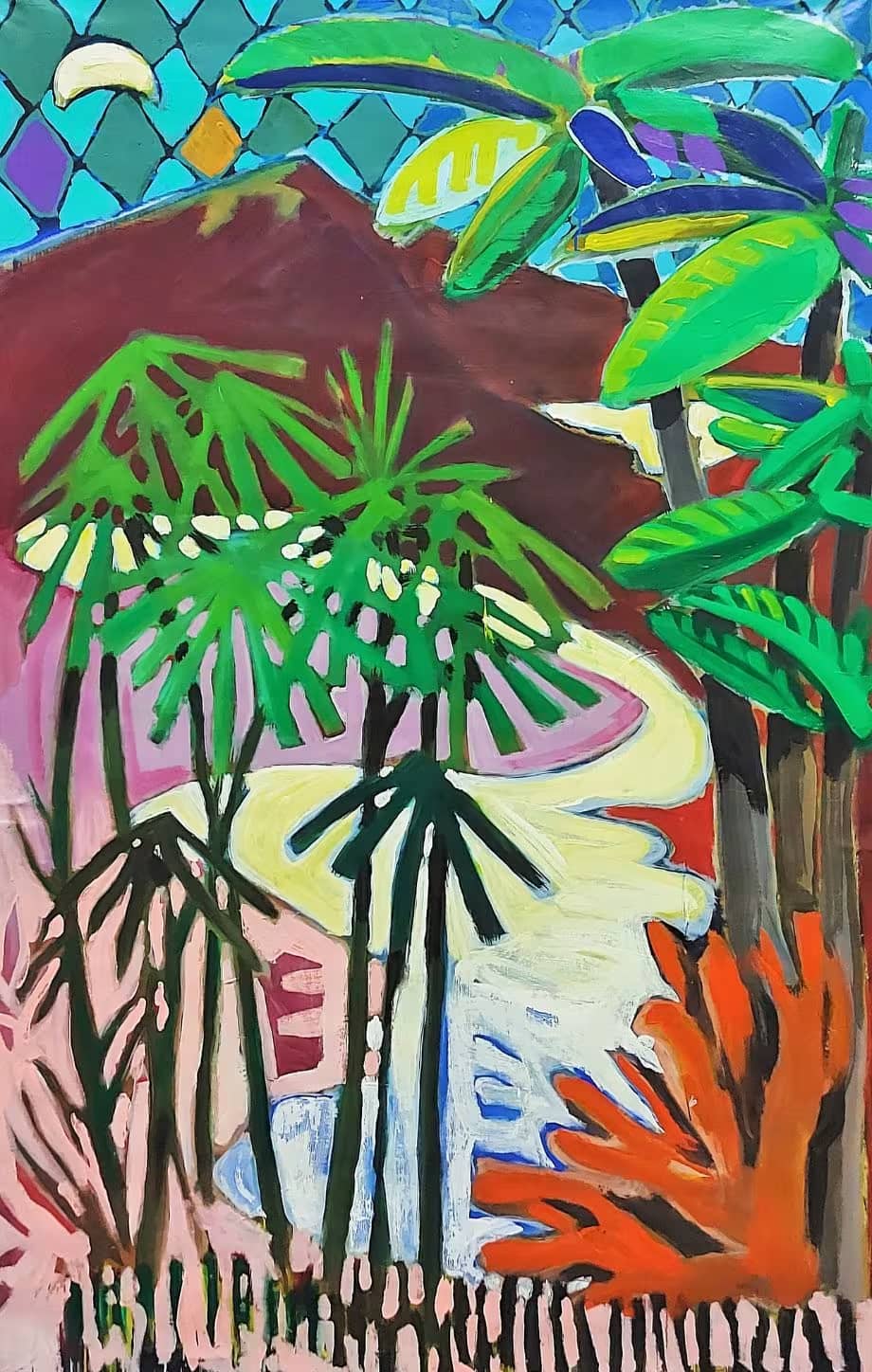
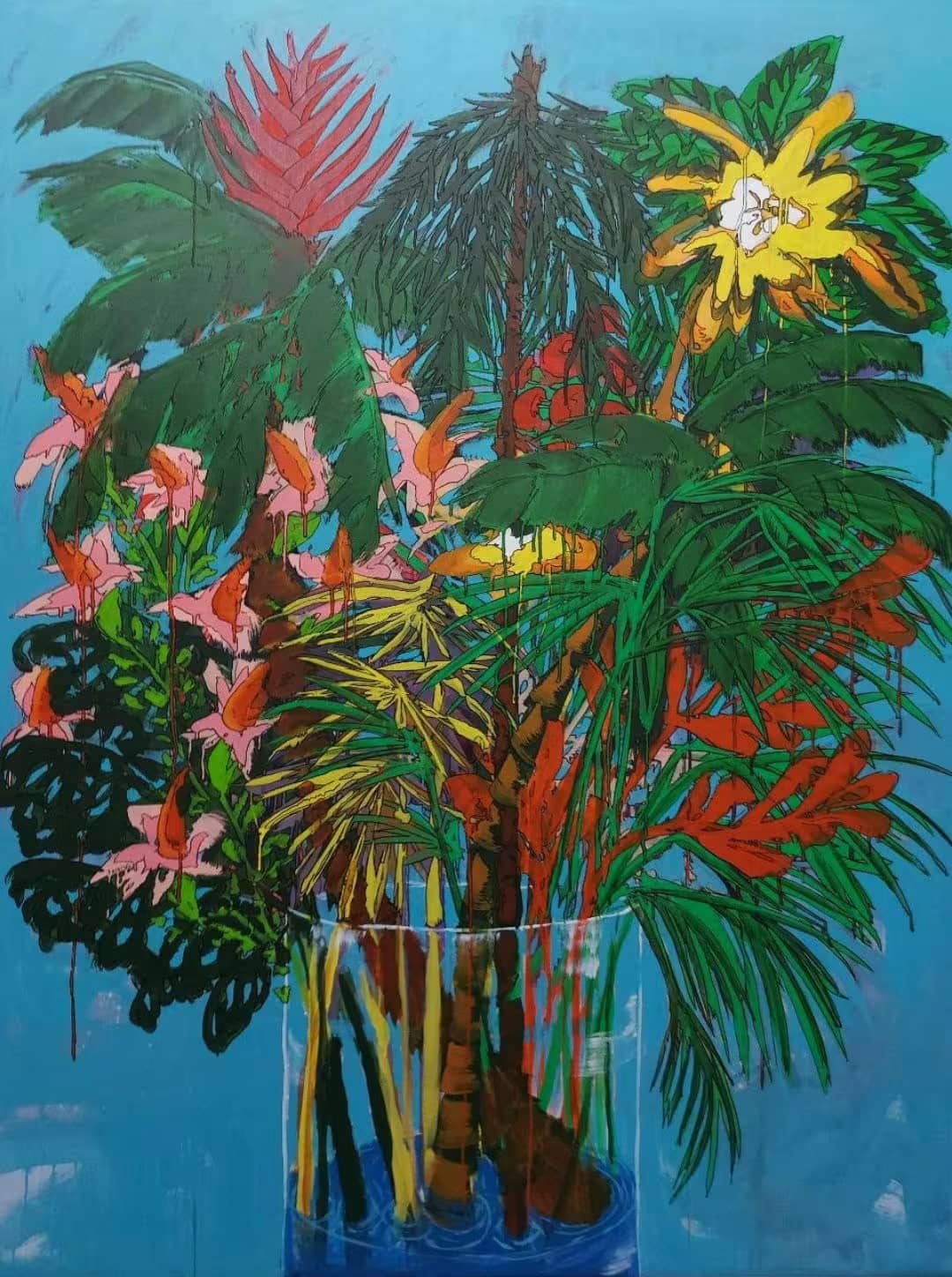
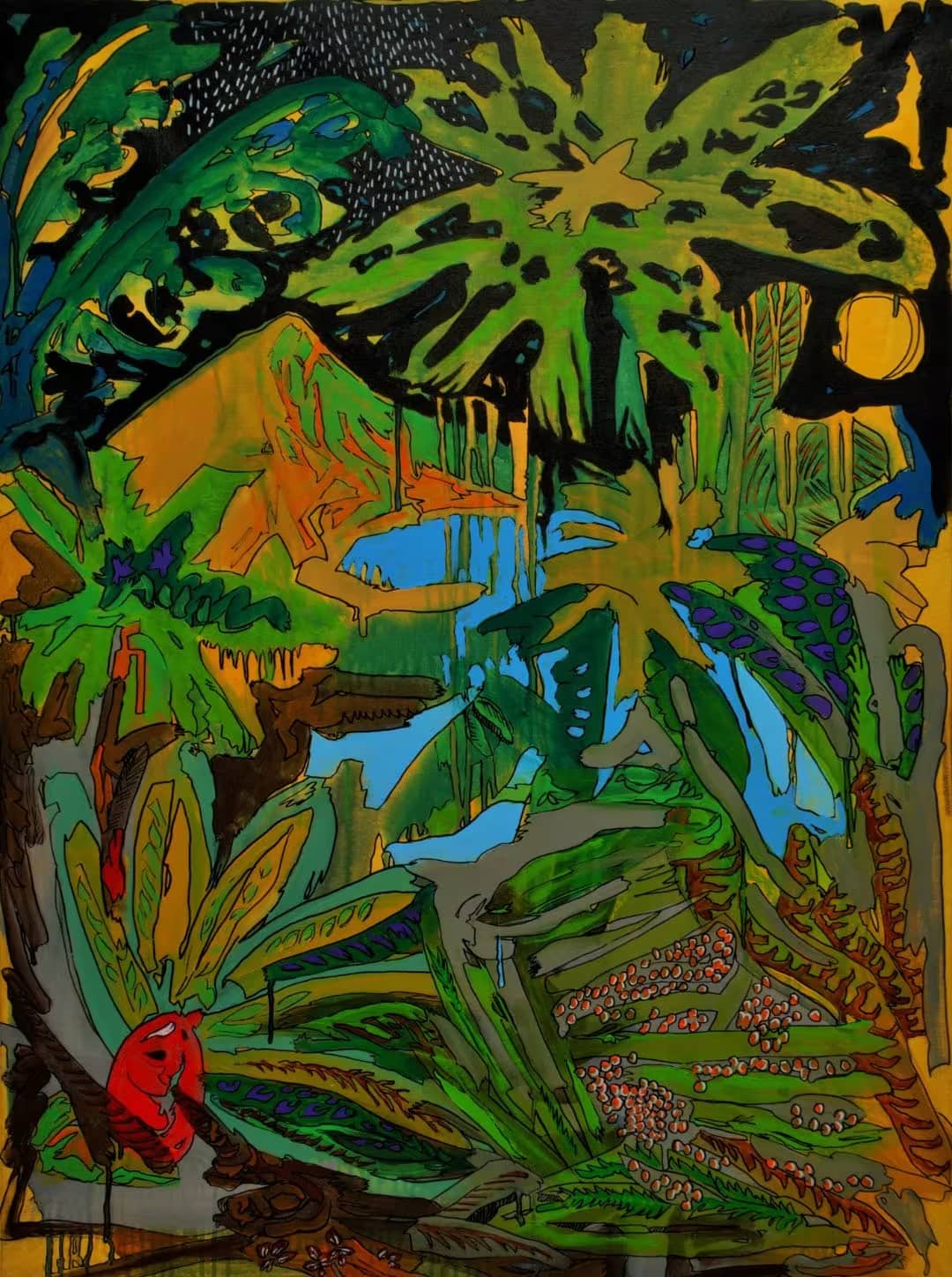
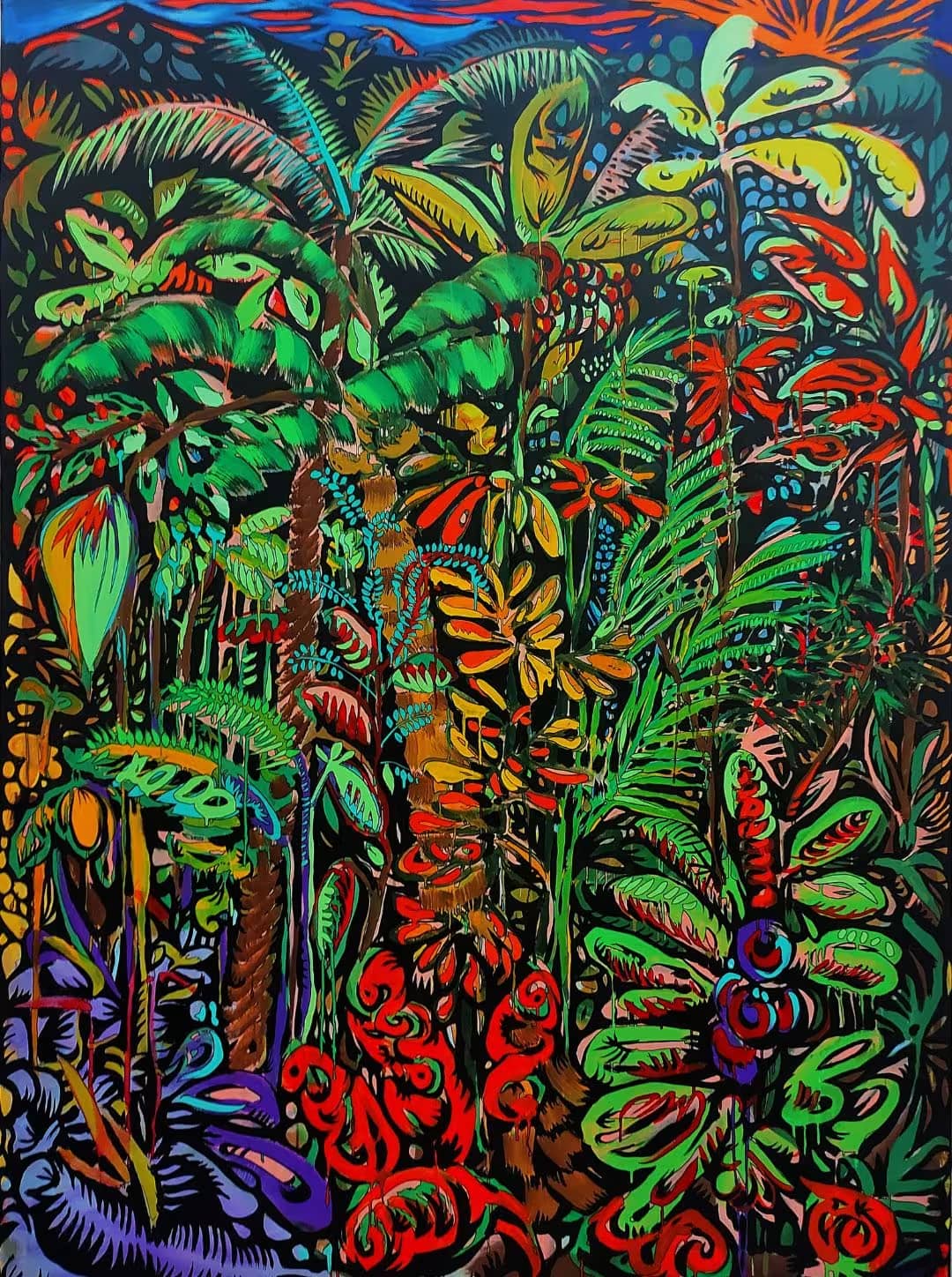
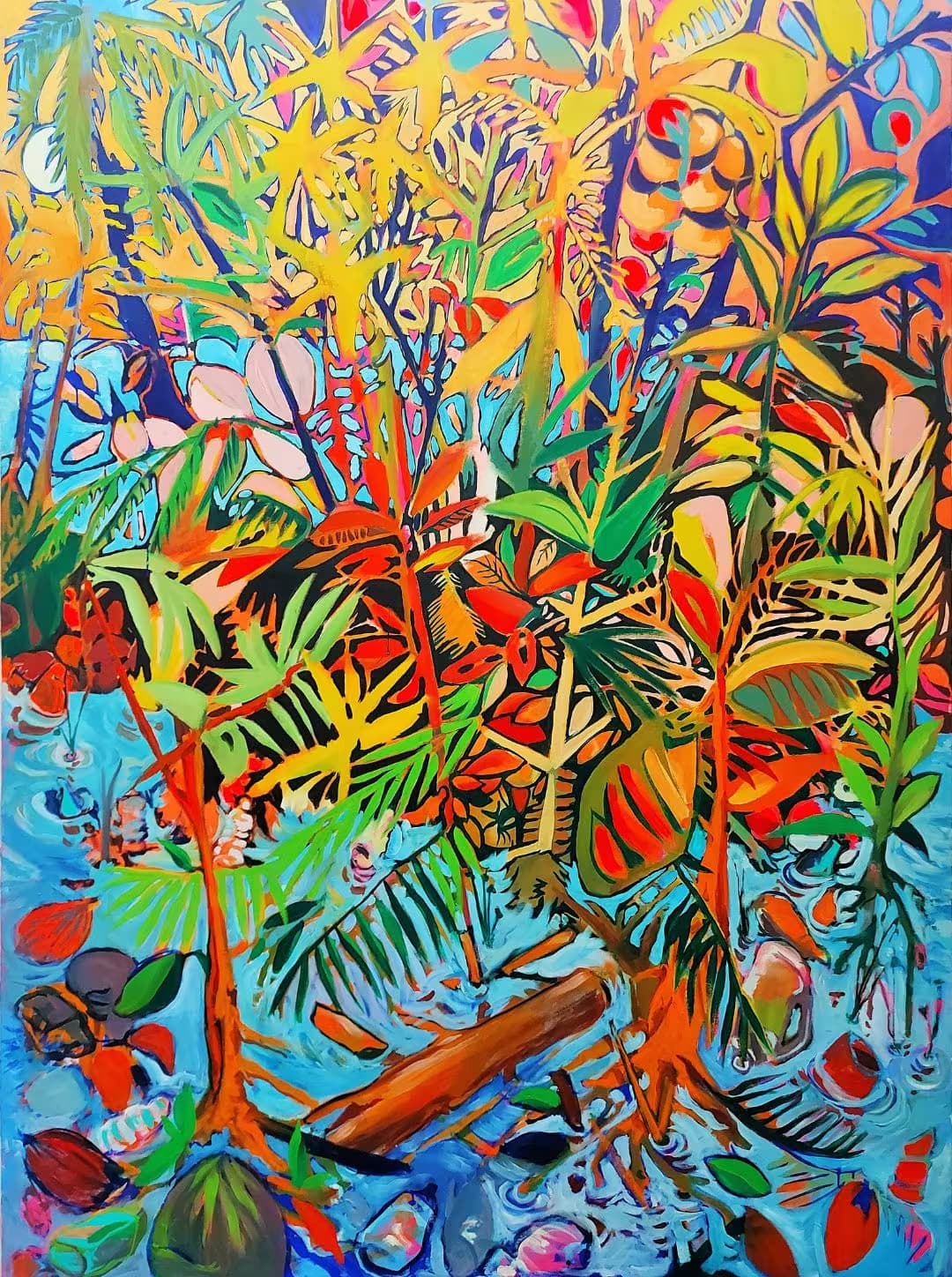
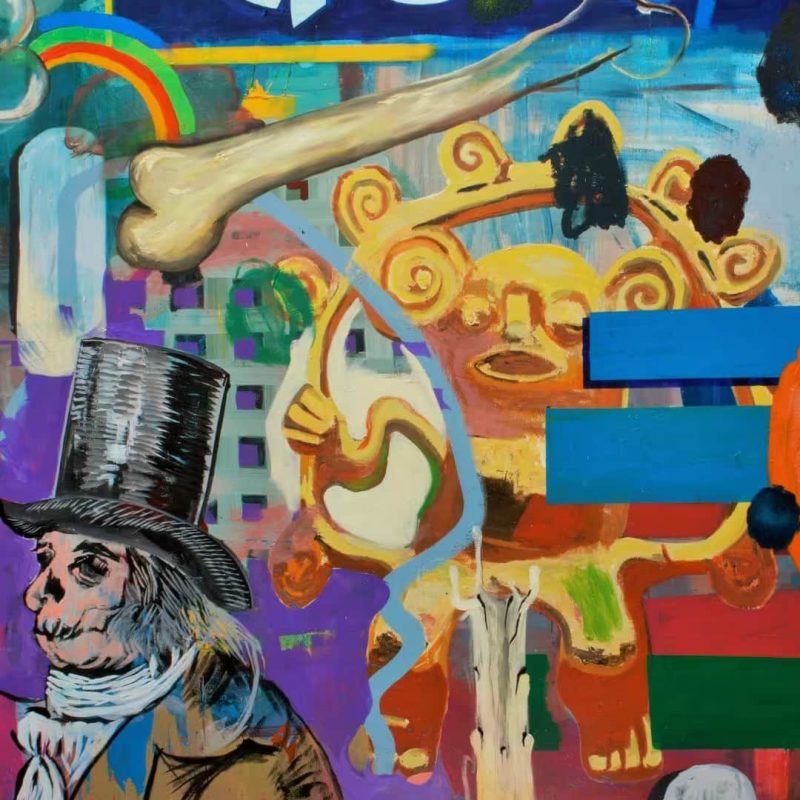
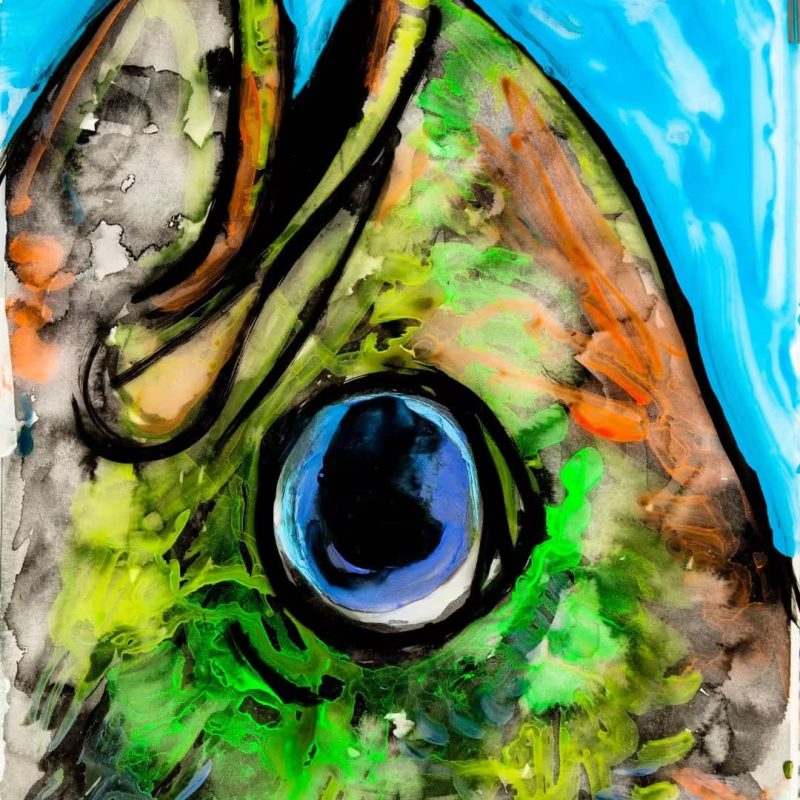
Baptiste uses this dystopian panorama to create another dawn, a new dawn. The construction of these paintings stems from a need to renew the landscape, from a longing for forgotten nature. To go to its re-encounter, to re-inhabit it. To see the colours of the prism of water penetrated by the sun. It is there that, as in the ideal Leon Battista Alberti, in De Pictura (1436), Baptiste’s windows open onto a world inaccessible at the time. New perspectives that point towards a journey, a quest.
Baptiste found the stimulus for this symbiosis with nature in the story of the anthropologist Claude Lévi-Strauss.
In 1935, Lévi-Strauss went in search of a genuine, pure Brazil, endowed with a ‘wild’ energy, a singular nature. In ‘Tristes Trópico’, moved by a feeling of freedom, he embarks on a ship for a 19-day voyage. He describes with meticulous beauty the sunset, the Brazilian coasts, the restlessness of his travelling companion: the surrealist André Breton. He goes into the Guanabara Bay in Rio de Janeiro, but is not surprised. In the music ‘Estrangeiro’, Caetano Veloso recalls the episode.
Back in Sao Paulo, where he was invited to teach at the University (USP), Lévi-Strauss was shocked by the dynamics of the city. With its vertiginous growth that, given the size of his country, there was no longer any sign of an indigenous population.
Lévi-Strauss, accompanied by his wife Dinah Dreyfus and the Modernist poet Mário de Andrade, went deep into the country with an ethnographic investigation of the indigenous communities. The anthropologist, who recounted with affection and precision what he saw, had an expectation of the trip that was partially fulfilled. He presents a certain anguish in a fragment of the story which, with traces of prophecy, says: ‘a few hundred years from now, in this same place, another traveller as desperate as me will mourn the disappearance of what I could have seen and have not seen’.
To use the traveller as the one who traces an imaginary line in time, a path, a movement. What crosses and is crossed by encounters.
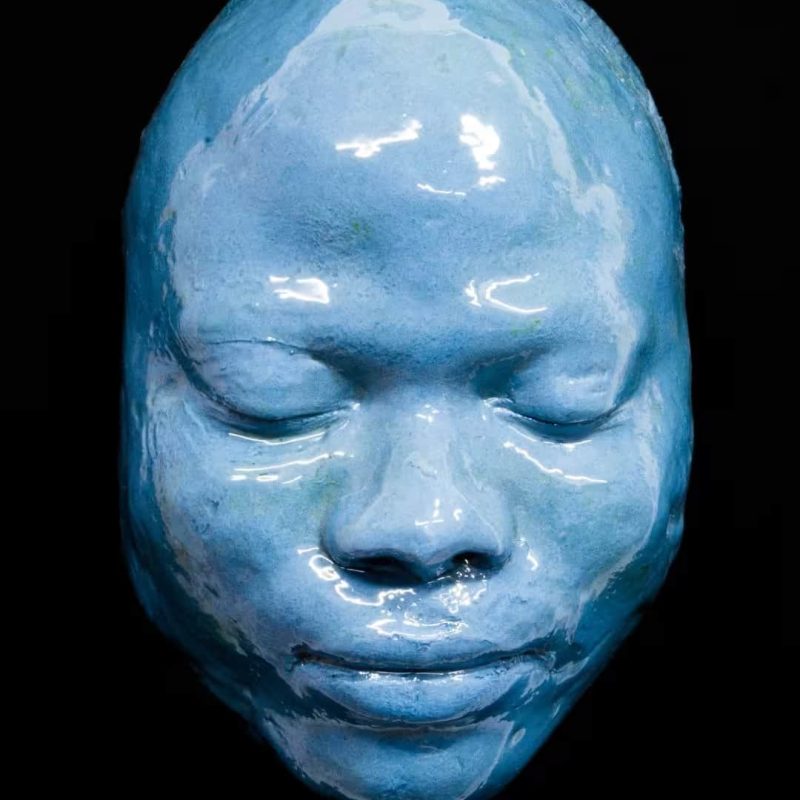
The journey is also paid for with the body. There are bodies that throw themselves into the sea without knowing if they will return. Immigration reveals a less adventurous aspect and more of a sacrifice for the right to life. Baptiste, in his trajectory, symbolises the traveller who struggles, in precarious conditions, to find a place.
In this sense, the artist points his gaze as a denunciation of a dehumanised, individualistic Europe, which abandons these other bodies to drift. The formation of a colonialist society based on its policies of indifference, which decides who should or should not die.
Disorder of a system, turn, change, transformation, energy, loss, chaos… The plurality of the concept of entropy reminds us of a disharmony that meets our present. As Lévi-Strauss said in the 1930s, instead of anthropology we should call entropology.
In (EN)TRÓPICOS, the artist, like a traveller, makes a journey to find a vital place. Perhaps these species do not exist; perhaps these idyllic landscapes never existed. Through the window that Baptiste opens for us, the air that we cannot breathe today is filtered in. He offers us a utopia; he gives us with his gestures a new paradigm. A (re)invented ecology.
(Text by Caio Cardial, curator)